
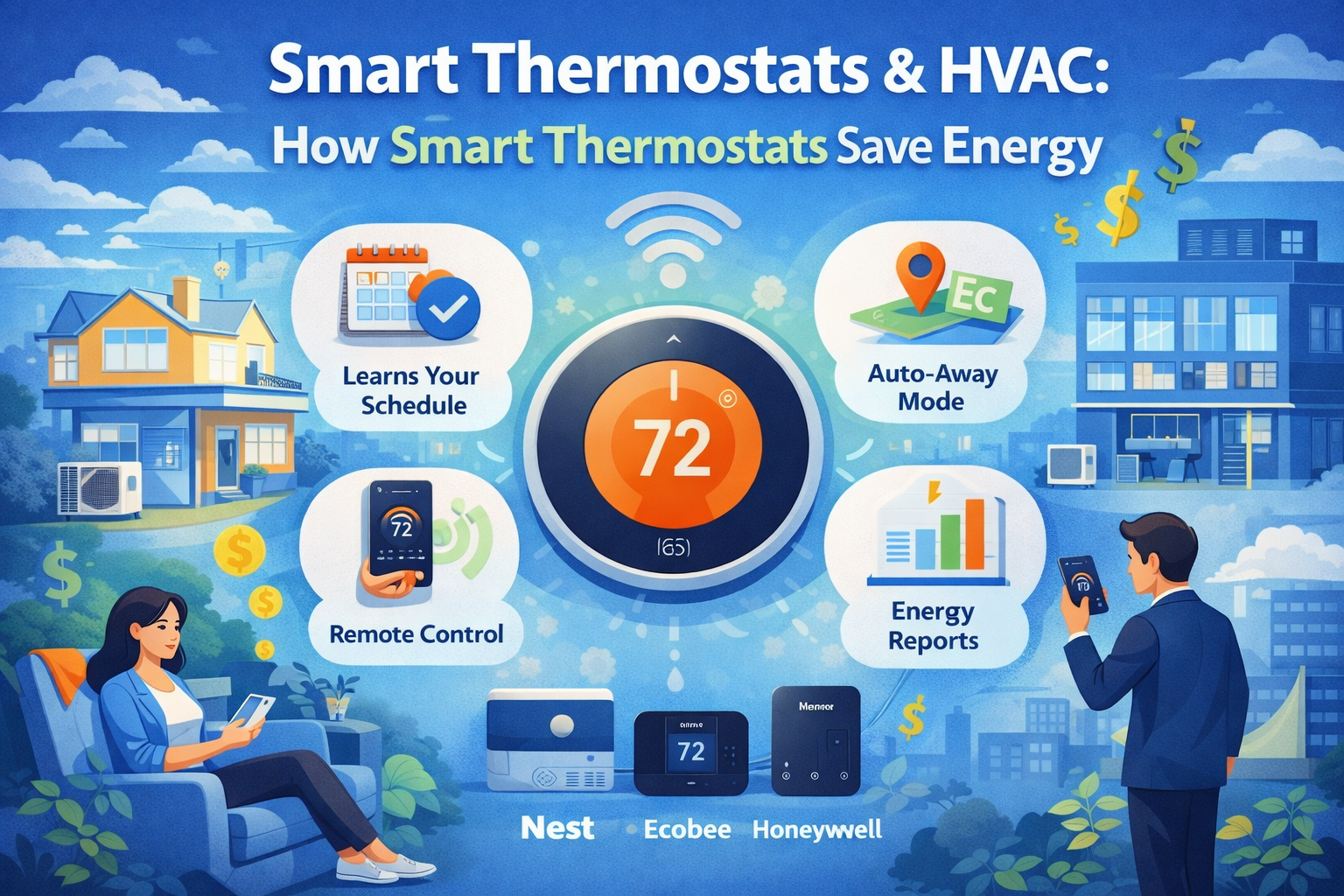
Heating and cooling make up one of the biggest portions of energy use in homes and commercial buildings. Many people try to reduce bills by turning systems on and off manually, but this often leads to wasted energy and uncomfortable indoor temperatures.
This is where smart thermostats come in.
Smart thermostats work with your HVAC system to automatically manage temperature, reduce waste, and improve comfort. Whether you are a homeowner or a business owner, understanding how smart thermostats save energy can help you make a smarter buying decision and lower long-term costs.
This guide explains everything in simple language, using real-world examples, so you can confidently choose the right smart thermostat for your needs.
What Is a Smart Thermostat?
A smart thermostat is a Wi-Fi enabled device that automates heating and cooling, unlike a traditional or manual thermostat. By connecting to your HVAC system, it learns your temperature preferences, follows schedules, and lets you control settings remotely.
Smart thermostats collect data such as indoor temperature, outdoor conditions, your schedule, and occupancy patterns to optimize comfort and efficiency. For example, many models automatically learn when you wake up or leave home and adjust the temperature accordingly, reducing wasted heating or cooling.
Because heating and cooling often account for a large portion of a home or building’s energy use, smart thermostats can have a noticeable impact on energy bills.
Traditional thermostats simply hold a set temperature until you change it. Programmable thermostats can follow a fixed schedule, which saves energy if used correctly. Smart thermostats go beyond that by connecting to the internet, allowing remote control, and using learning algorithms or sensors to create efficient schedules automatically.
In short, all three types can save energy, but smart thermostats add convenience and advanced features that increase savings and comfort.
How Smart Thermostats Work with HVAC Systems
Smart thermostats control your HVAC (Heating, Ventilation, and Air Conditioning) equipment just like traditional thermostats, but with added connectivity.
In a typical home system, the thermostat connects to the furnace or air handler and tells it when to turn heating or cooling on and off. Most modern smart thermostats support single-stage and multi-stage furnaces, air conditioners, and heat pumps.
They usually need a common power wire to provide continuous power. If your system does not have one, some thermostats use batteries or power adapters. Checking compatibility before buying is important.
For residential use, smart thermostats work with forced-air systems, heat pumps, and sometimes boilers. During setup, you identify your system type so the thermostat can control it properly.
Once installed, the smart thermostat functions like a normal thermostat but also uses Wi-Fi, motion sensors, and phone location data to make smarter decisions.
Commercial and Business HVAC Systems
In offices, retail stores, restaurants, and other commercial spaces, smart thermostats or smart controllers are often used to manage multiple zones or locations.
Business-focused systems allow managers to:
Control temperatures remotely
Schedule HVAC operation based on business hours
Receive alerts about system issues
Prevent unnecessary adjustments by staff
Energy savings in businesses come not only from better scheduling but also from easier monitoring and remote management.
Installation and Compatibility Tips
Check system compatibility
Before buying, make sure the smart thermostat supports your heating and cooling system, including system type and number of stages.
Power requirements
Most smart thermostats require continuous power. If your current thermostat has limited wiring, you may need a power adapter or a battery-supported model.
Wi-Fi coverage
Smart thermostats rely on a stable internet connection. Make sure the thermostat location has good Wi-Fi signal.
Professional installation
Some systems, such as complex commercial systems or special heating setups, may require professional installation. If you are unsure, consulting an HVAC technician is recommended.
Key Energy-Saving Features of Smart Thermostats
Learning Schedules
Many smart thermostats learn your daily routine by observing temperature changes you make over time. Instead of manually programming schedules, the thermostat builds one automatically.
This ensures the HVAC system runs only when needed.
Geofencing and Occupancy Detection
Smart thermostats can detect when you are home or away using phone location or motion sensors.
When everyone leaves, the thermostat automatically switches to an energy-saving temperature. When you return, it restores comfort settings.
This prevents heating or cooling empty spaces.
Smart Scheduling
Even without learning features, smart thermostats allow easy scheduling through apps.
You can set daily or weekly temperature plans so your space is comfortable when occupied and energy-efficient when empty.
Remote Control
Smart thermostats can be controlled from anywhere using a smartphone or computer.
If plans change or you forget to adjust settings, you can make changes instantly, preventing energy waste.
Learning Algorithms
Some smart thermostats use advanced software to adjust schedules gradually based on seasons, weather patterns, and usage history.
These small adjustments help save energy while maintaining comfort.
Smart Home and Utility Integration
Smart thermostats can work with voice assistants and smart home systems.
Some also integrate with energy-saving programs that reduce HVAC use during peak demand times, often without noticeable comfort changes.
Energy Reports and Insights
Many smart thermostats provide usage reports showing:
How often heating or cooling runs
Trends over time
Suggestions for saving energy
Seeing this information helps users make better energy decisions.
Energy-Saving Benefits: How Much Can You Save?
Homeowners typically save between 8% and 15% on heating and cooling costs when using a smart thermostat properly.
Even small temperature changes can lead to meaningful savings over time.
Businesses often save even more due to larger HVAC systems and longer operating hours.
Example: Home Savings
Average annual heating and cooling cost: $900
Estimated savings: $70 to $150 per year
Payback period: 1 to 3 years
Example: Business Savings
Retail stores reduce after-hours energy use
Restaurants prevent overnight HVAC waste
Offices lower weekend energy consumption
Over time, savings often exceed the initial cost of the thermostat.
Real-World Examples of Savings
Homeowner Example
A family installs a smart thermostat before summer. They enable scheduling and away mode.
Results:
Lower monthly energy bills
Improved comfort
No need for constant manual adjustments
Business Example
A restaurant chain installs smart thermostats across locations.
Results:
Automatic shutdown after closing
Remote temperature control
Fewer HVAC service calls
Lower operating costs
Smart Thermostat Brands and Models (Overview)
Google Nest
Automatic learning
Simple design
Strong energy-saving features
Ideal for hands-off users
Ecobee
Room sensors for balanced temperatures
Good for large homes and offices
Advanced comfort control
Smart home friendly
Honeywell Home
Reliable and professional-grade
Strong scheduling features
Popular for business use
Amazon Smart Thermostat
Budget-friendly
Basic smart features
Suitable for smaller homes
Reducing Energy Bills with Smart Thermostats
Smart thermostats reduce bills by:
Automatically adjusting temperatures
Reducing HVAC runtime
Preventing waste during unoccupied hours
Encouraging energy-aware behavior through insights
Over time, these small efficiencies add up to noticeable savings.
Tips to Maximize Energy Savings
Let the thermostat learn your routine
Use eco or away modes
Avoid frequent manual overrides
Adjust temperatures by 1–2 degrees
Review energy reports regularly
Keep HVAC systems maintained
Consistency is key to achieving the best results.
Conclusion
Smart thermostats bring intelligence, automation, and convenience to HVAC systems in both homes and businesses.
By learning schedules, detecting occupancy, and offering remote control, they ensure heating and cooling run only when needed. This leads to lower energy bills, improved comfort, and reduced environmental impact.
For homeowners, smart thermostats offer effortless savings and convenience. For business owners, they provide cost control, operational efficiency, and simplified management.
When choosing a smart thermostat, focus on compatibility, features, and how it fits your lifestyle or business needs. Once installed and configured, the thermostat works quietly in the background, saving energy every day.