
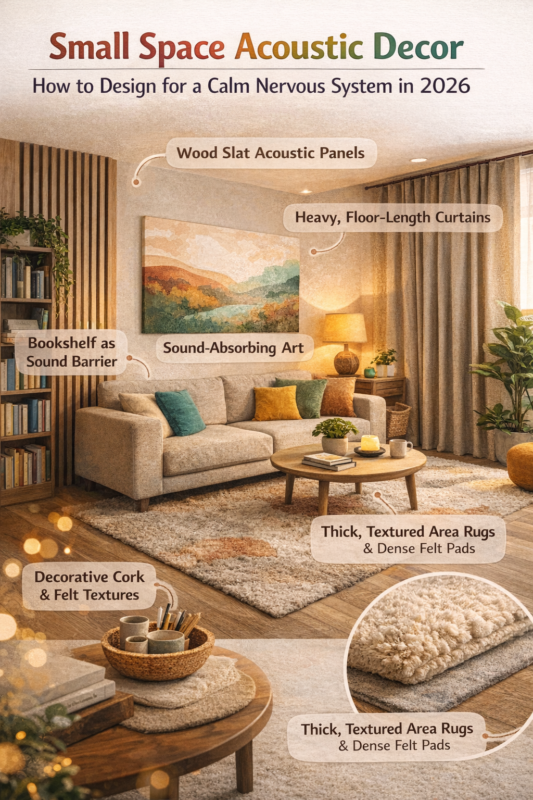
Living in a compact apartment or a shared urban space often means dealing with one invisible, constant intruder: noise. Whether it is the rumble of traffic, the neighbors upstairs, or the hum of appliances echoing off bare walls, unwanted sound is a massive source of subconscious stress.
In 2026, the focus of compact interior design has shifted dramatically. It is no longer just about buying multi-functional furniture or using mirrors to make a room look bigger. The most sophisticated design trend right now is small space acoustic decor.
This trend focuses on using specific textures and materials to absorb sound, effectively turning a chaotic, echo-filled apartment into a sensory sanctuary. But acoustic decor does more than just quiet a room—it reveals a fascinating amount of information about the people living inside it.
The Behavioral Science of Sound
To understand why acoustic decor is trending, you have to understand how the brain processes background noise.
When you are in an environment with poor acoustics—where every footstep and voice bounces off hard floors and bare walls—your nervous system is forced into a state of low-grade hypervigilance. The brain has to work overtime to filter out irrelevant auditory data, which drains cognitive energy and elevates cortisol (the stress hormone).
Intentional acoustic design is a behavioral intervention. By controlling the auditory environment, you immediately lower the cognitive load, allowing the mind to relax.
Thin-Slicing a Space: What Acoustics Reveal About a Person
If you want to understand how someone processes the world, pay attention to the acoustics of their home. When you walk into a small space, you can immediately gauge a person’s sensory baseline and need for control.
1. The “Echo Chamber” (High Tolerance or High Overwhelm)
If you walk into an apartment characterized by entirely hard surfaces—bare hardwood floors, glass tables, unadorned walls, and no window treatments—you will notice a distinct echo.
Behaviorally, this indicates one of two things. First, the person might have a very high threshold for sensory input; they simply aren’t bothered by chaos and external noise. Alternatively, it can indicate a state of overwhelm. They may be so drained by their daily life that they haven’t had the cognitive bandwidth to intentionally curate their environment for comfort.
2. The “Sensory Cocoon” (High Sensitivity and Intentionality)
Conversely, if you walk into a small apartment that feels instantly “hushed,” you are observing a highly intentional space. This person has utilized heavy drapes, thick rugs, and textured wall hangings.
This indicates someone who is highly self-aware of their sensory needs. They likely have a job or lifestyle that requires intense focus or social interaction, and they actively use their physical environment as a tool to decompress and regain control over their mental state. They value privacy, internal reflection, and emotional regulation.
How to Implement Small Space Acoustic Decor
You do not need to glue ugly foam wedges to your walls to achieve a quiet home. Modern small space acoustic decor is designed to look beautiful while secretly absorbing sound waves.
Here are the most effective ways to upgrade your apartment’s acoustics in 2026:
1. Acoustic Art Panels
This is the ultimate secret weapon for small apartments. Instead of standard canvas prints, you can now purchase acoustic art panels. These look exactly like modern, high-end artwork, but they are printed on specialized, sound-absorbing foam. Placing a few of these on the wall shared with your loudest neighbor can drastically reduce noise transfer.
2. The Power of “Heavy” Textiles
Sound bounces off hard surfaces. To stop the bounce, you need density.
- Window Treatments: Swap out flimsy blinds for heavy, floor-to-ceiling velvet or thermal curtains. These trap sound waves trying to enter through the glass.
- Rugs: A thin decorative rug won’t do much. Layer a thick, high-pile rug over a dense felt rug pad. This absorbs the sound of your own footsteps and prevents noise from bouncing off the floor.
3. Cork and Wood Slat Walls
Wood slat panels featuring a felt backing have become incredibly popular. They bring a warm, Scandinavian aesthetic to a room while the felt backing catches and dampens auditory reverberations. Similarly, decorative cork wall tiles are making a massive comeback as a stylish, eco-friendly way to insulate a room against sound.
4. Strategic Bookshelves
If you share a thin wall with a noisy neighbor, use your furniture as a barrier. Push a large, floor-to-ceiling bookshelf against that specific wall and fill it with books. The varied depths and dense paper act as an excellent, natural sound baffle.
Designing for the Mind, Not Just the Eye
When you live in a small space, every square inch matters. But it is crucial to remember that design isn’t just visual—it is deeply sensory.
By incorporating small space acoustic decor, you aren’t just decorating; you are actively engineering an environment that supports a calm, focused, and resilient mind. The ultimate luxury isn’t a massive living room—it is the ability to close your door and finally hear yourself think.