
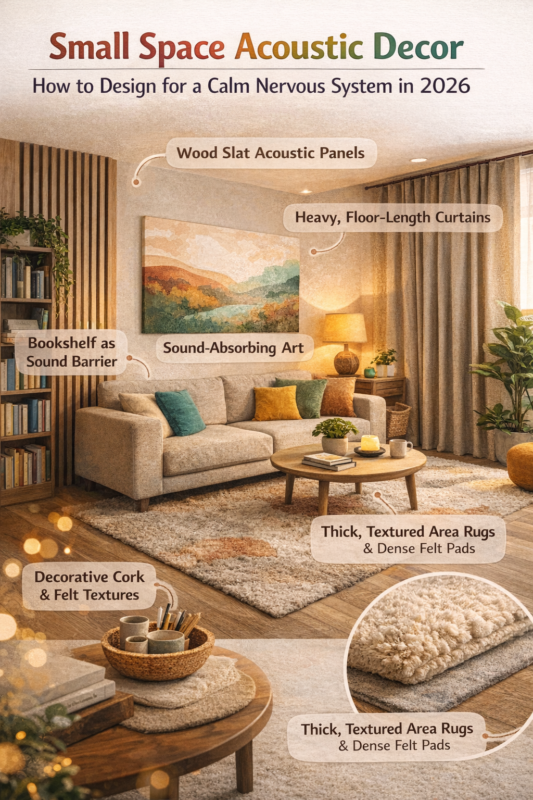
Living in a compact apartment or a shared urban space often means dealing with one invisible, constant intruder: noise. Whether it is the rumble of traffic, the neighbors upstairs, or the hum of appliances echoing off bare walls, unwanted sound is a massive source of subconscious stress.
In 2026, the focus of compact interior design has shifted dramatically. It is no longer just about buying multi-functional furniture or using mirrors to make a room look bigger. The most sophisticated design trend right now is small space acoustic decor.
This trend focuses on using specific textures and materials to absorb sound, effectively turning a chaotic, echo-filled apartment into a sensory sanctuary. But acoustic decor does more than just quiet a room. It reveals a fascinating amount of information about the people living inside it.
The Behavioral Science of Sound
There’s a reason acoustic decor keeps showing up everywhere lately, and it has to do with how the brain handles background noise.
Poor acoustics — hard floors, bare walls, every footstep and voice bouncing around put your nervous system on low-grade alert without you noticing. The brain has to keep filtering out noise that doesn’t matter, and that filtering costs energy and pushes cortisol up. Get the sound in a room under control and that filtering work disappears. The mind actually gets to rest.
What a Room’s Acoustics Tell You About the Person Living There
Walk into someone’s home and the way sound behaves in it tells you something about how they handle the world especially in a small space, where you notice this stuff almost immediately.
Hard surfaces everywhere, and you can hear the echo. Bare hardwood, glass tables, nothing on the walls, no curtains. This usually means one of two things. Either the person genuinely doesn’t register noise as a problem chaos just doesn’t register for them or they’re stretched thin enough that curating their space for comfort hasn’t made it onto the list of things they have energy for.
The place feels hushed the second you walk in. Heavy drapes, thick rugs, textured hangings on the walls. This is someone who knows exactly what they need sensorially and built their space around it on purpose. Usually it’s someone whose work or life demands a lot of focus or social output, and who treats their home as the place they go to get that back. Privacy and quiet matter to them.
Getting Quiet Into a Small Apartment
None of this requires foam wedges glued to your walls. Sound-absorbing decor in 2026 is built to look like normal, good-looking furniture and art it just happens to also eat noise.
Acoustic art panels. These look like regular framed prints, but they’re printed on sound-absorbing foam instead of canvas. Hang a couple on the wall you share with a loud neighbor and the noise transfer drops noticeably.
Weight and density in your textiles. Sound bounces off anything hard and flat, so the fix is adding mass. Swap thin blinds for heavy floor-to-ceiling curtains velvet or thermal both work to stop sound coming in through the window. On the floor, a thin decorative rug barely helps; put a thick, high-pile rug over a dense felt pad instead, and it’ll absorb your own footsteps as well as noise bouncing up off the floor.
Wood slat panels and cork tiles. Slat panels with a felt backing behind them give you a warm, Scandinavian look while the felt does the actual work of dampening echo. Cork wall tiles do something similar and have come back into style, partly because they’re a cheap, sustainable way to insulate a room against sound.
A bookshelf against the noisy wall. If a neighbor’s noise comes through one specific wall, push a floor-to-ceiling bookshelf against it and fill it with books. The uneven depths and dense paper work surprisingly well as a sound baffle it’s furniture doing double duty.
Designing for What You Hear, Not Just What You See
In a small apartment, every choice matters more because there’s less room to hide a bad one. Acoustic decor is really just an acknowledgment that a room affects you through more than your eyes.
Do this right and you’re not just decorating you’re setting up a space that lets your mind actually settle. Being able to shut the door and hear yourself think again matters more than square footage ever will.